
What Is Sun Energy and How Does It Work?
Sun energy is the radiant energy produced by the Sun and delivered to Earth as light and heat. Every morning, sunlight crosses space before warming rooftops, soil, oceans, and living systems. It may seem endless, but its useful availability changes with weather, season, location, and daylight hours. Understanding these limits is essential for discussing solar power accurately.
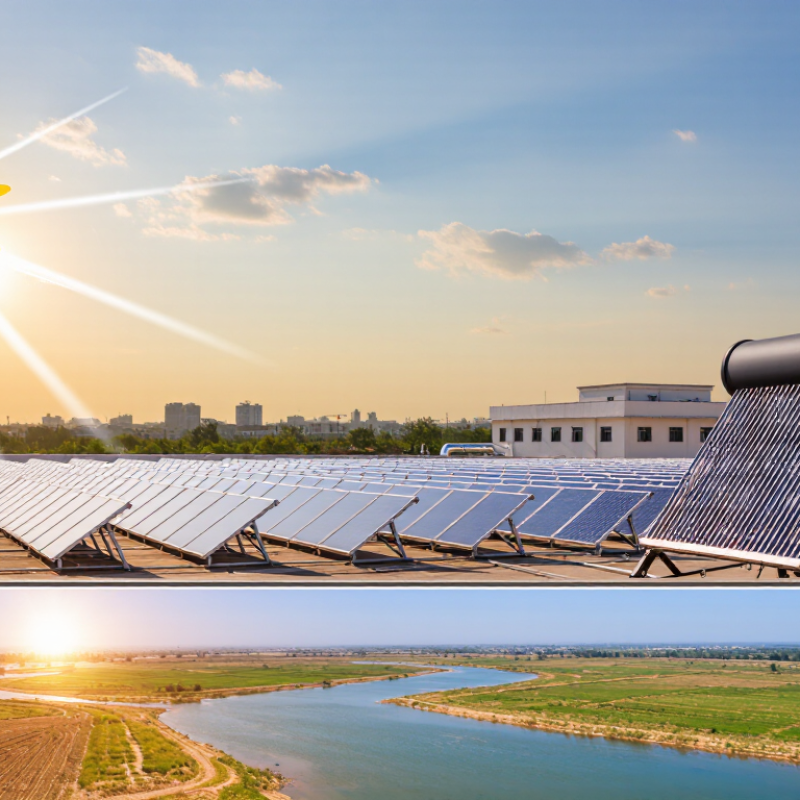
Solar technologies capture sunlight in different ways. Photovoltaic cells use semiconductor materials to release and move electrons when photons strike their surface. This movement creates direct-current electricity, which an inverter converts for household appliances or the wider grid. Solar thermal systems work differently. They collect heat for water, buildings, or industrial processes. A dark rooftop collector can become noticeably hot under strong midday sunlight.
The performance of a solar system depends on panel angle, shading, temperature, equipment quality, and maintenance. Engineers assess these factors through measured solar radiation, electrical testing, and long-term performance data. Organizations such as the National Renewable Energy Laboratory and the International Energy Agency provide widely used technical research. Batteries can store surplus electricity, although they add cost, material needs, and efficiency losses. Grid connections may also balance production when clouds appear.
The basic principle is clear.
However, simple explanations can hide important details. Solar panels do not produce the same output every hour, and manufacturing them requires energy and resources. A reliable evaluation should consider the full system, not only its clean operation. This article explores how sun energy travels, how people capture it, and where its practical strengths and weaknesses become visible.
What Sun Energy Is and Where It Comes From
What Is Sun Energy and How Does It Work?
Sun energy is the energy released by the Sun and received across space. It is not a single substance. Most of it travels as electromagnetic radiation, including visible light, infrared radiation, and ultraviolet radiation. A smaller stream of charged particles moves outward as solar wind. These forms begin deep inside the Sun’s core, where temperatures reach about 15 million degrees Celsius.
There, hydrogen nuclei collide under extreme pressure and fuse into helium. This nuclear fusion changes a small amount of mass into energy, following Einstein’s principle that mass and energy are connected. The energy moves through the Sun before escaping from its surface. It then travels about 150 million kilometers to Earth, arriving after roughly eight minutes and twenty seconds. That journey is invisible, but its effects are familiar.
Sunlight warms a stone, drives plant photosynthesis, and can create electricity in photovoltaic cells. The atmosphere absorbs or scatters some radiation, so the ground receives less energy than the Sun emits. Clouds, seasons, and the Earth’s angle also change the amount available. A simple description can mislead. Sun energy is powerful, but it is uneven, intermittent, and not automatically usable. Careful measurement is needed before judging how much energy a place can actually receive.
What Is Sun Energy and How Does It Work? — What Sun Energy Is and Where It Comes From
| Data Dimension | Scientific Value or Description | How It Explains Sun Energy |
|---|---|---|
| Primary Source | The Sun | Sun energy originates in the Sun’s interior and is released as radiation that travels through space. |
| Energy-Generating Process | Nuclear fusion | In the Sun’s core, hydrogen nuclei combine to form helium. A small amount of mass is converted into energy according to E = mc². |
| Core Temperature | Approximately 15 million °C | The extremely high temperature and pressure in the core enable hydrogen fusion to occur. |
| Total Solar Power Output | Approximately 3.83 × 1026 watts | This is the Sun’s total radiant power emitted in all directions. |
| Average Earth–Sun Distance | Approximately 149.6 million km | This average distance is called one astronomical unit and helps determine the solar energy received near Earth. |
| Light Travel Time to Earth | Approximately 8 minutes 20 seconds | Sunlight travels at about 299,792 km per second, so energy produced in the Sun reaches Earth after several minutes. |
| Solar Irradiance Above Earth’s Atmosphere | Approximately 1,361 W/m² | This is the average solar power received per square metre on a surface facing the Sun at the top of Earth’s atmosphere. |
| Global Average Incoming Solar Energy | Approximately 340 W/m² | Because Earth is spherical and rotates, sunlight is spread over the entire planetary surface rather than received at the full facing-surface value everywhere. |
| Energy Reflected by Earth | Approximately 30% | Clouds, atmospheric particles, ice, water, and land surfaces reflect part of incoming sunlight back into space. |
| Energy Absorbed by Earth System | Approximately 240 W/m² on a global average | The absorbed energy warms the atmosphere, land, and oceans and drives evaporation, weather, and climate processes. |
| Main Forms of Solar Radiation | Ultraviolet, visible, and infrared radiation | These electromagnetic waves carry solar energy across space. Earth’s atmosphere absorbs or scatters some wavelengths before they reach the surface. |
| Photovoltaic Conversion | Light converted directly into electricity | Semiconductor materials absorb photons and separate electric charges, producing a direct-current electrical flow. |
| Solar Thermal Conversion | Radiation converted into heat | Solar collectors absorb sunlight and transfer the heat to water, air, or another working fluid for practical use. |
| Natural Energy Uses | Photosynthesis, evaporation, winds, and ocean circulation | Sunlight provides the energy that supports plant growth and powers major parts of Earth’s water and atmospheric cycles. |
| Renewable Character | Continuously replenished on human time scales | Solar radiation is continually produced by ongoing fusion in the Sun, although the intensity at a location varies with time, season, weather, and latitude. |
Values are approximate scientific averages and can vary with atmospheric conditions, location, season, and measurement method.
Related Posts
-

2026 How to Harness Sun Energy for Sustainable Living?
-
Essential Solar Engineering Tips You Need to Know?
-
How to Maximize Benefits of Solar Energy for Your Business?
-
Why Is Solar Power Essential for a Sustainable Future?
-
China Best Solar System Project Innovations and Achievements?
-

Why is Solar Power the Future of Sustainable Energy?