Choosing a solar work light manufacturer in China is not just a price comparison. Buyers need to examine product design, testing practices, production capacity, and after-sales support. A bright specification sheet can look convincing, but it cannot show how a lamp performs on a cold jobsite or after repeated charging cycles. Small details matter: the seal around a battery compartment, the stability of a tripod, and the clarity of replacement-part information.
This guide explores ten manufacturers associated with solar work lighting and offers a practical starting point for evaluation. The term solar work covers products with different needs, from portable inspection lamps to larger lights for outdoor construction areas. Not every supplier will suit every project. Some may focus on custom orders, while others may offer a narrower range or longer lead times. Verify certifications, sample quality, warranty terms, and production details directly with each company. Ask how brightness is measured, what battery chemistry is used, and whether performance data reflects real operating conditions. These questions take time. They can also prevent costly surprises.
Rankings should be treated with care. Public information may be incomplete, and supplier capabilities can change. A manufacturer that looks ideal online may not be the best fit once communication, shipping, and quality checks begin. Use this list to compare options, request evidence, and decide which questions deserve a closer look. Sometimes, the right choice is not the most obvious one.
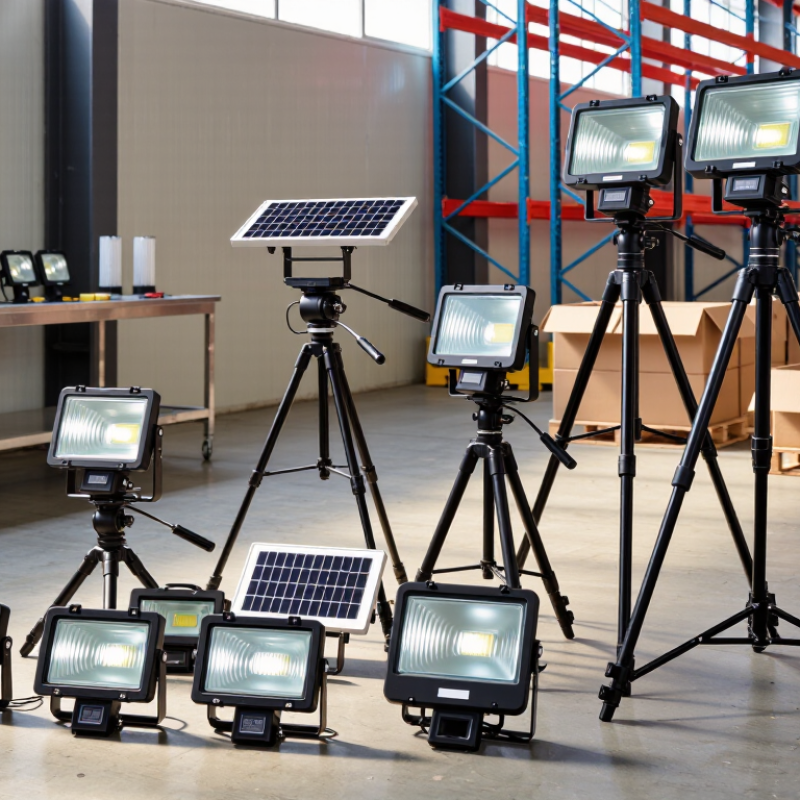
A solar work light turns daylight into stored electricity, then uses that energy to power LEDs after dark. Its photovoltaic panel produces direct current, while a charge controller regulates battery charging and helps prevent overcharging. At night, a switch or light sensor connects the battery to the LED circuit. Simple in principle. Real performance depends on panel size, battery capacity, sunlight, and temperature.
The technology is widely deployed: the IEA Photovoltaic Power Systems Programme estimated that global solar installations added about 446 gigawatts in 2023. That figure describes the wider PV market, not work lights, but shows the scale of the underlying technology. LEDs also matter. The U.S. Department of Energy reports that LEDs use at least 75% less energy and can last up to 25 times longer than incandescent lighting. A bright beam still needs enough battery reserve. The weakest part is often not the LED. It may be a shaded panel, a cloudy charging day, or a battery that is too small for a long shift. Real job sites are messier than product tests.
China Top 10 Solar Work Light Manufacturers?
China’s Solar Work Light Manufacturing Industry
China’s solar work light industry brings together component suppliers, assembly plants, and testing teams. Many factories combine LED modules, rechargeable batteries, solar panels, and rugged housings in one product line. This can shorten coordination between production stages. It does not guarantee consistent quality. Buyers should examine panel output, battery capacity, charging time, and runtime under stated conditions. Ask how these figures were tested. A bright beam in a showroom may not last through a full outdoor shift.
Manufacturing capabilities vary. Some facilities focus on high-volume models, while others support custom housing, beam patterns, or mounting options. Practical details matter: a sealed switch, a stable handle, and a lens that resists scratches can affect daily use. Quality checks may include water-spray tests, drop tests, and battery-cycle sampling. Test scope differs, so request records rather than relying on broad claims. Specifications can look neat on paper; field performance is less tidy. Even a well-made light needs suitable exposure to sunlight.
Tips: Request a sample and test it after cloudy weather. Compare actual runtime with the supplier’s stated figure. Check charging ports, seals, and replacement-part availability before ordering.
Criteria for Selecting Leading Solar Work Light Manufacturers
When comparing solar work light manufacturers in China, look beyond advertised brightness. Ask how lumen output was measured and whether it stays stable as the battery drains. A 1,000-lumen rating means little without runtime details. Request test data for a full charge, several brightness settings, and a typical overnight cycle. Useful evidence includes dated reports, clear test conditions, and traceable product specifications. Small details matter.
Battery performance deserves close attention. Ask about battery capacity, expected cycle life, charging time, and protection against overcharging or deep discharge. Check whether the solar panel’s output suits the battery and intended daily use. A light used on a shaded construction site may recharge very differently from one placed in direct sun. No checklist catches everything. A sample unit can also behave differently from a production batch, so record test results and discuss any variation.
Manufacturing control affects consistency. Review inspection steps for wiring, seals, switches, and charging circuits, not just final appearance. Ask how water resistance and impact claims are verified, and request relevant test documentation. A factory audit or third-party inspection can help confirm that procedures match the paperwork. Supplier communication is another practical measure: clear answers about tolerances, replacement parts, and lead times make planning easier. Slow, vague replies are a warning. One unanswered technical question may reveal a real gap.
| Evaluation Criterion | Suggested Weight | What to Assess | Evidence to Request or Verify |
|---|---|---|---|
| Lighting Performance | 20% | Measured light output, beam distribution, color quality, operating modes, and runtime at clearly specified brightness settings. | Photometric test reports, product specifications, and runtime results showing the test conditions and output level. |
| Battery and Charging System | 15% | Battery chemistry and capacity, protection features, charging behavior, replaceability, and performance under expected operating conditions. | Battery specifications, charging and protection details, cycle-life test conditions, and applicable transport documentation such as UN 38.3 test information for lithium batteries. |
| Durability and Environmental Protection | 15% | Resistance to dust, water, impact, vibration, corrosion, and temperature conditions relevant to the intended work environment. | Test reports identifying the exact product configuration and test method. Where an ingress-protection rating is claimed, check the test basis against IEC 60529. |
| Quality Control and Testing | 15% | Incoming-material checks, in-process inspections, final functional testing, traceability, and procedures for handling defects. | Quality-control plan, sample inspection records, production test checklist, and corrective-action process. |
| Manufacturing Capability | 15% | Ability to manage assembly, sourcing, production planning, and repeat orders while maintaining consistent specifications. | Facility or production-process review, capacity information for the relevant product type, and a documented production workflow. |
| Customization and Product Development | 8% | Options for light output, mounting, housing, controls, packaging, and market-specific product adaptations. | Confirmed customization scope, prototype process, tooling requirements, sample approval steps, and change-control procedure. |
| Compliance and Documentation | 7% | Availability of documentation required for the destination market and the product’s electrical and battery configuration. | Applicable declarations, test reports, labeling details, and battery documentation. Confirm requirements for the target market rather than relying on generic claims. |
| Delivery and After-Sales Support | 5% | Order communication, lead-time planning, spare-parts availability, warranty terms, and response to quality issues. | Written lead-time estimates, warranty terms, service contact process, and agreed procedures for replacements or corrective action. |
| Total Suggested Weight | 100% | Use the same criteria and evidence requirements when comparing shortlisted suppliers. Weights can be adjusted to match the application and target market. | |
Suggested scoring method: Score each criterion from 1 (insufficient evidence or capability) to 5 (strong, verifiable evidence or capability), then apply the suggested weight. Treat ratings as buyer-assigned evaluation scores, not as verified rankings of individual manufacturers.
Chinese solar work-light manufacturers often differ more in engineering focus than in appearance. These ten profiles offer practical ways to compare suppliers, not claims about named companies. A compact-light producer may prioritize low weight and simple mounting. A high-output specialist may focus on beam coverage and heat control. One workshop may build rugged housings for outdoor use. Another may offer adjustable panels for uneven sunlight. Small details matter.
A design-led manufacturer may provide several mounting options. A component-focused producer may pay close attention to battery capacity and charging behavior. Some factories specialize in portable lights for temporary work areas. Others develop fixed units with separate solar panels and longer cables. A customization-oriented supplier may adjust housing, controls, or packaging. A quality-focused maker should be able to explain its inspection process and share relevant test records. Ask for evidence.
The tenth profile is a flexible, general-purpose producer serving buyers with mixed requirements. For every supplier, compare runtime claims under stated brightness settings, panel wattage, battery specifications, and replacement-part availability. Request a sample and test it through cloudy days and repeated charging cycles. Specifications can look convincing on paper. Actual performance still needs checking. These profiles are a starting point, not a substitute for direct verification.
Comparing solar work light manufacturers starts with the conditions the light must handle. Check the panel output, battery capacity, beam angle, and stated runtime against your actual worksite needs. A light used beside a loading bay may need a wider beam than one mounted along a narrow path. Ask how runtime changes on cloudy days, and whether the battery can be replaced. Small details matter. Request a sample and test it after dusk, noting brightness, charging time, and how securely the bracket holds. A polished catalog is not proof, even when it looks convincing.
Then compare suppliers on more than unit price. Ask for clear product specifications, quality-control steps, warranty terms, and realistic production lead times. Request recent test reports where relevant, and confirm that the documents match the exact model being quoted. Check whether the supplier can explain differences between sample performance and bulk production. That answer can reveal a lot. Communication deserves a practical test, too: send a technical question and see whether the reply is specific, prompt, and consistent. Be cautious of vague promises or unusually short delivery estimates. One imperfect sample does not always tell the whole story, but repeated faults should not be dismissed. Choose a manufacturer whose evidence, service, and production capacity fit your project, not just the lowest quotation.