Top 10 Tips for Choosing a Solar MPPT Controller?
When selecting a Solar MPPT controller, knowledge is key. The right controller can improve efficiency and ensure the longevity of your solar energy system. An effective Solar MPPT controller manages power from solar panels, optimizing performance under various conditions.
Many factors come into play. Users often overlook important specifications like voltage ratings and current ratings. It's crucial to understand how these specifications affect your solar setup. Rushing the selection process may result in poor performance. You might end up with a controller that doesn’t fit your needs.
Consider the specifics. Evaluate your energy requirements and the solar panel configuration. Reflect on the environment where the system will operate. These details can guide your choice. The importance of choosing the right Solar MPPT controller cannot be stressed enough. Each decision impacts both short-term efficiency and long-term benefits.
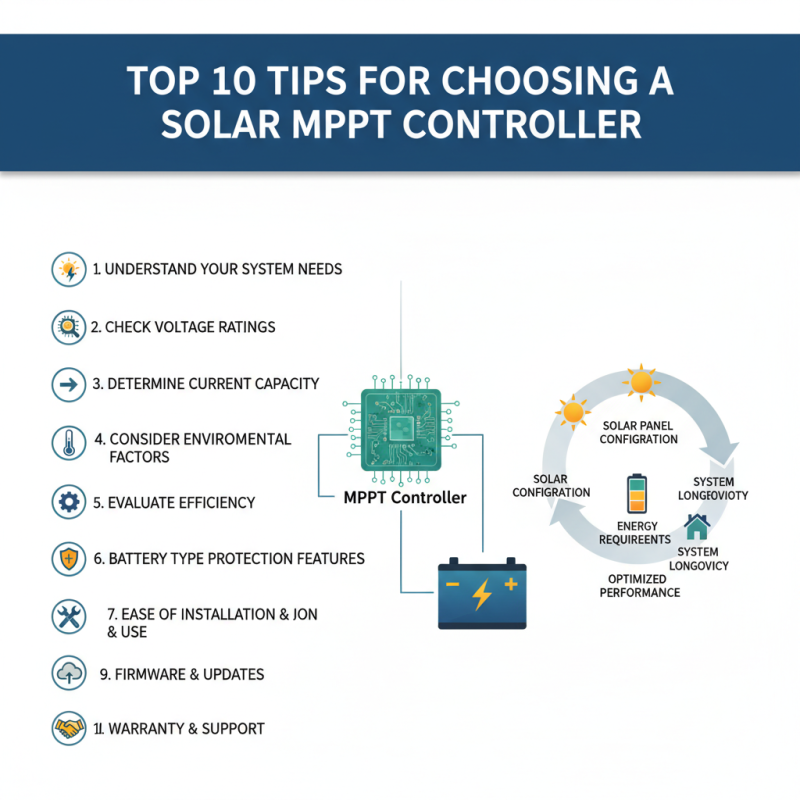
Understanding MPPT Controllers: What They Are and How They Work
Solar MPPT (Maximum Power Point Tracking) controllers play a crucial role in optimizing solar energy systems. They ensure that solar panels operate at their maximum power point, which can increase energy harvest by up to 30% compared to traditional controllers. Research by the National Renewable Energy Laboratory indicates that using MPPT technology can significantly enhance the efficiency of solar installations.
Understanding how MPPT controllers function is essential. They adjust the electrical load on the solar panels to keep them operating at peak performance. This adjustment involves real-time tracking of the solar panel's output, taking into account factors such as temperature and sunlight intensity. However, not all controllers are created equal. Many users overlook the importance of compatibility with different solar systems, which can lead to inefficiencies.
Temperature management also plays a critical role. High temperatures can reduce performance. Studies suggest that operating in extreme conditions can result in up to a 20% efficiency loss. Users should reflect on their local climate when choosing a controller. Those who fail to take these factors into account may find themselves underutilizing their solar system's potential.
Top 10 Tips for Choosing a Solar MPPT Controller
Key Features to Look for in a Solar MPPT Controller
When choosing a solar MPPT controller, understanding key features is crucial. Efficiency is a primary concern. Look for controllers with a maximum efficiency rating above 95%. This ensures you are maximizing energy capture from your panels. Poor efficiency can lead to significant energy losses, wasting potential power.
Consider the voltage rating as well. Controllers should match the voltage of your solar panels. Mismatched voltages can lead to system failures. It is important to check the input voltage range specified in the product details.
One often overlooked feature is monitoring capability. Advanced controllers offer real-time data tracking. This allows users to check performance easily. According to industry reports, systems with monitoring options often achieve 15%-20% better performance due to timely interventions.
Don’t forget about environmental considerations. Look for controllers rated for the environment in which they will operate. Extreme temperatures can affect performance. Also, ensure they have proper certifications for safety and durability.
Finding the perfect balance can be challenging. Sometimes, higher costs come with improved features. This may require more thought on budget allocations. Always weigh out the long-term benefits against initial investments. Ultimately, making an informed choice will enhance your solar energy system's effectiveness.
Compatibility with Solar Panel Systems: Ensuring Optimal Performance
Choosing a solar MPPT controller isn't just about price. Compatibility with your solar panel system is crucial. You need to understand the specifications first. Not all controllers work well with every panel. Check the voltage ratings carefully. A mismatch can lead to inefficiency.
Consider the size of your solar setup. If your panels are high-capacity, ensure the controller can handle that power. Calculate the total output of your solar array. Compare it with the controller's input limits. Sometimes, smaller systems overlook this, leading to underperformance.
Wiring is another aspect to ponder. Poor connections can significantly affect performance. Double-check everything during installation. Make sure the wires are the right gauge. Any mistakes here can result in energy loss. It's easy to overlook these details, but they are essential for optimal performance.
Monitoring and Display Options for User-Friendly Experience
When choosing a solar MPPT controller, user-friendly monitoring and display features play a crucial role. A clear, intuitive display can greatly enhance the user experience. Look for controllers with easy-to-read screens that provide real-time data. This allows users to monitor performance at a glance. Digital readouts are preferred. They can show voltage, current, and power generation details. However, some displays might use vague symbols. This can confuse users, making it hard to interpret data quickly.
Connectivity options also matter. Controllers with Wi-Fi or Bluetooth capabilities allow remote monitoring. This feature lets users check performance from their smartphones or computers. It's convenient but not always flawless. Sometimes, connectivity issues arise. Users may struggle to get their devices synced. A good controller should still function independently without constant connectivity. Regular updates and firmware support can improve these features but may not always be provided. Evaluating these aspects ensures a more satisfying solar power experience.
Budget Considerations: Balancing Cost and Quality in Your Choice
Choosing a solar MPPT controller involves careful budget considerations. Many options exist, but balancing cost and quality is crucial. A cheaper controller might save money upfront. However, it can lead to inefficiencies over time. This trade-off is real. Investing in a quality product is often the smarter choice. It can enhance your solar system's performance significantly.
Evaluate the features each controller offers. Some may look appealing on the surface. Yet, without essential functions, they fall short. Look for reviews and user experiences. These insights reveal long-term reliability. A controller that fits your budget may not always be the best for your needs. Think about the future. Will you expand your solar setup? Be honest about your requirements.
Consider the warranty and customer service. These factors often reflect a product's quality. A long warranty indicates confidence in the product. Quality controllers may be a bit more expensive, but they often offer better efficiency and reliability. Don't rush this decision. Research thoroughly to avoid regrets later.
